01
Set the job and the bar.
Define the deliverable and the acceptance criteria. Go local-only if the work has to stay on your box.
One brief in. Local models race it on your graphics card all night. You keep the result that clears your bar.
Twelve catalog fleets, three jobs each, three times over, on a desktop PC in daily use: a browser, VS Code and a speech server open the whole time. Then three hours of jobs back to back.
Inspect the full benchmarkWindows edition 1.2.1, build 13. AMD Ryzen 9 5900X, 64 GB RAM, NVIDIA GeForce RTX 3090 24 GB (driver 560.94), Windows 10 Pro 22H2. Lanes run CUDA through the app’s own llama.cpp build: flash attention, q8_0 KV cache, every layer on the GPU. Models on the internal NVMe drive.
Catalog sweep: 12 fleets × 3 jobs × 3 repetitions, best-of-4, 1–8B models. 108 of 108 jobs completed; the crowned winner was correct in 100 (93%, against 87% for a random attempt). Median job 3–33 s; the same fleets took 6–472 s on a 16 GB Mac. Eight of the twelve fleets kept every lane on the card at once.
Sustained run: 553 best-of-6 jobs in 3 hours (185, 188 and 180 an hour), 3,318 attempts, 0 errors, lane memory flat at 20.3 GB. GPU energy about 0.3–0.4 Wh per resident best-of-4 job. The owner’s apps shared the card throughout. Your card, model mix and desktop will change these figures.
A brief, a few local lanes and a clear bar for what gets kept.
Define the deliverable and the acceptance criteria. Go local-only if the work has to stay on your box.
Models try different approaches in parallel. Nightshift clusters the attempts and checks them against the brief.
Preview the output, read the evidence and download the files.
Drawn at random from the Nightshift archive, and they change as you watch. Click any one to open it.
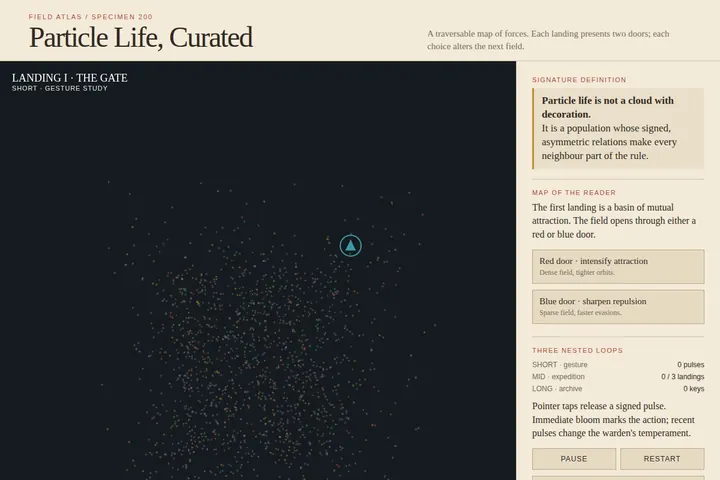 Atlas of particle life.INTERACTIVE · HTML · ATTEMPT 194 Opens in a new tabLIVE HTML
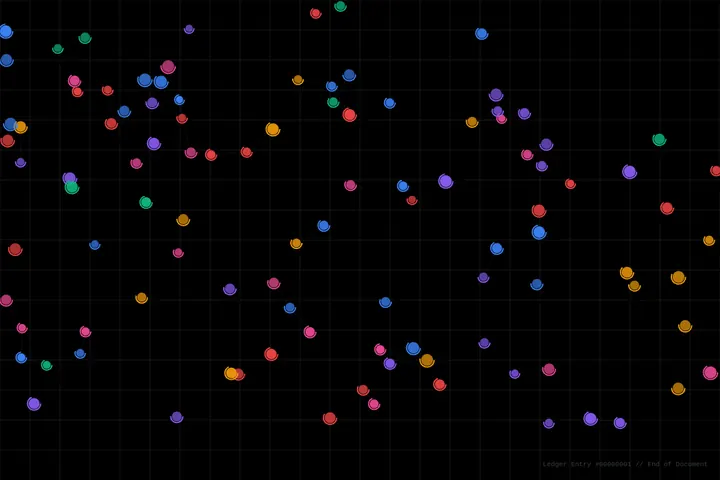 Color on a grid.LIVE SIMULATION · HTML Opens in a new tab
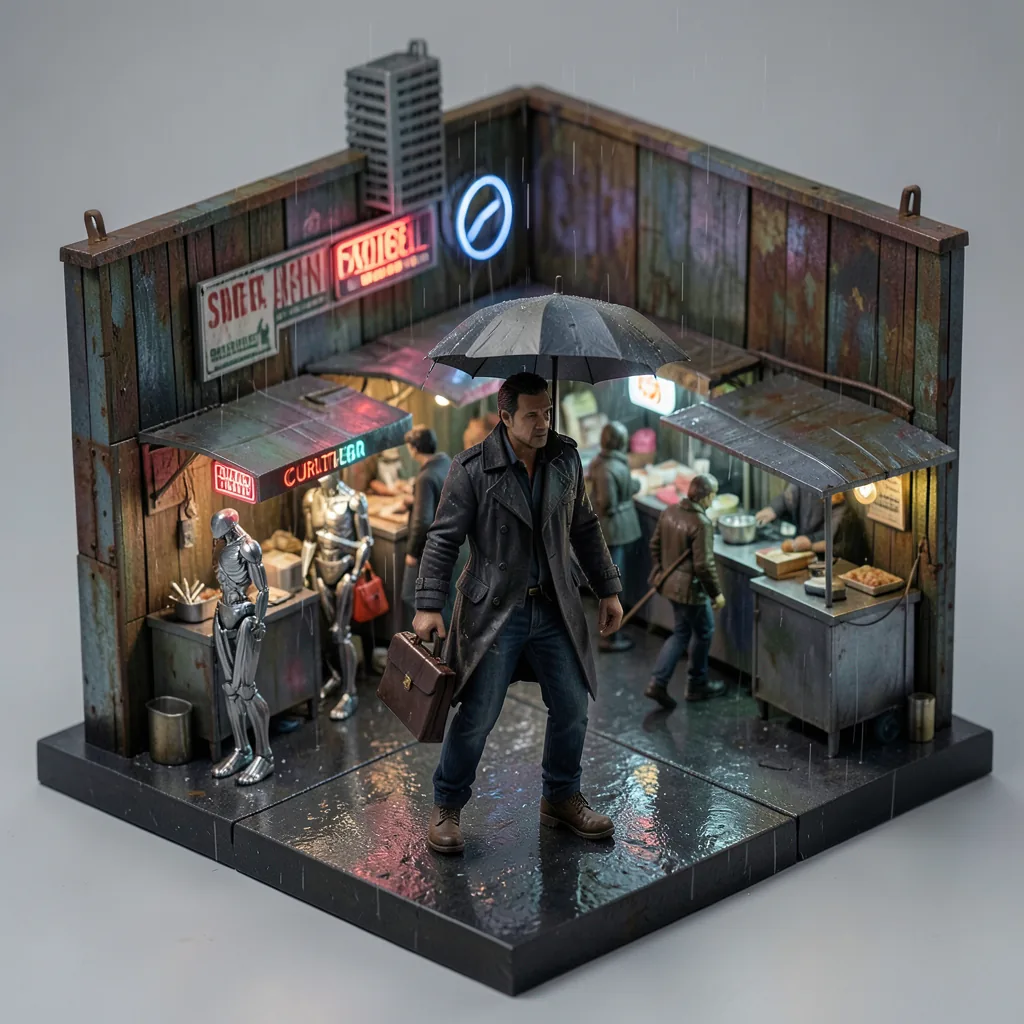 A rainy market, boxed.GENERATED STILL · PNG Opens in a new tab
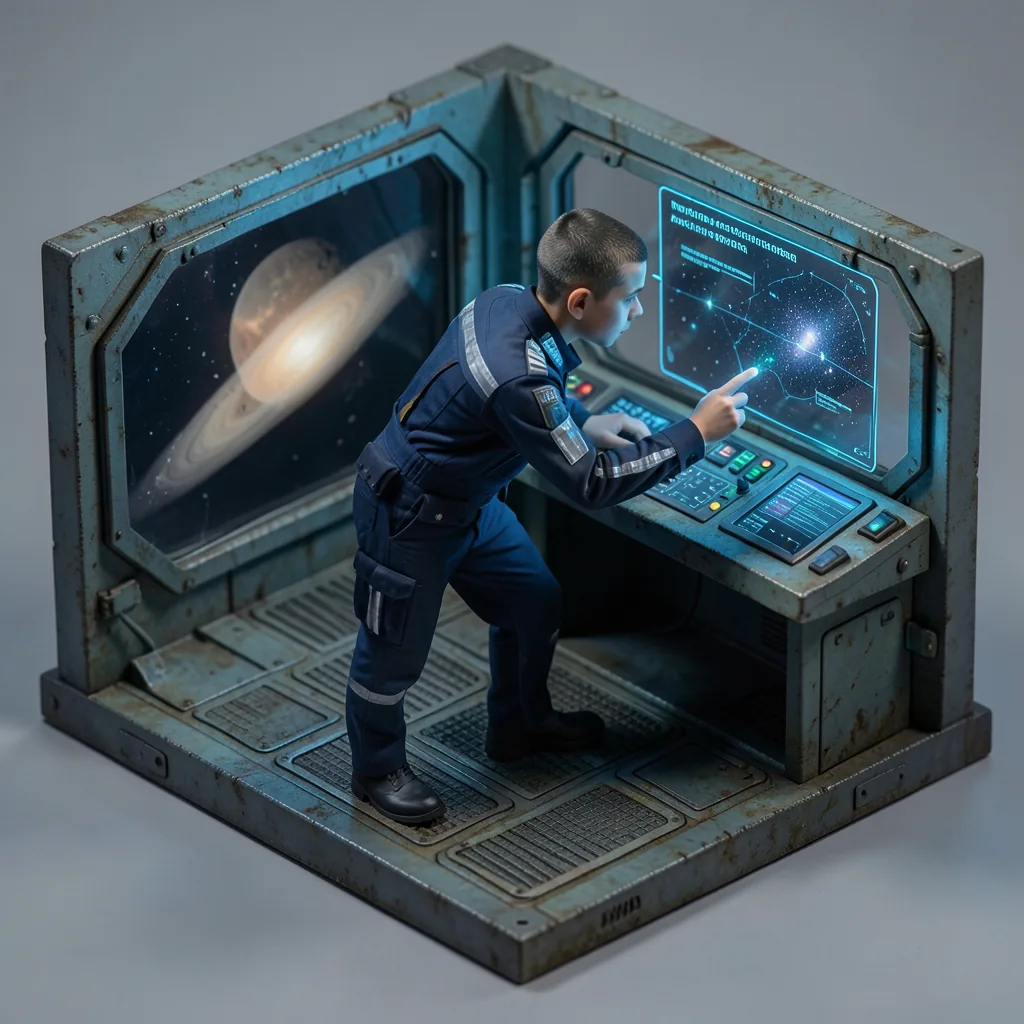 The command bridge, in miniature.GENERATED STILL · PNG Opens in a new tab
From separate archive jobs, not the hardware-card run. These examples are not performance measurements.
Most local AI runs one hand-wired model stack. Changing it costs days, so it rarely changes. Nightshift ships with Fleets: ready-made model crews you swap in one click.
Every change means
Every catalog fleet whose models fit a 24 GB card, best-of-4, three jobs each, three times over. The Mac M5 campaign ran the same fleets on the same jobs; the last column is how much faster the PC finished a job.
| Fleet | Completedjobs | Winners correctthe attempt it crowned | Median jobseconds · plan | GPU energyper job | Mac M5, 16 GBsame fleet, median job | Faster than the Macper job |
|---|---|---|---|---|---|---|
starter-16all lanes resident | 9/93 jobs × 3 reps | 8/933/36 of all attempts | 3.7sconcurrent | 0.26Whper job | 12s2/3 winners · concurrent | 3×decode speed, not planning |
percept-liteall lanes resident | 9/93 jobs × 3 reps | 9/932/36 of all attempts | 9.1sconcurrent | 0.61Whper job | 6s2/3 winners · concurrent | —decode speed, not planning |
asr-factoryall lanes resident | 9/93 jobs × 3 reps | 6/922/36 of all attempts | 10.3sconcurrent | 0.80Whper job | 30s1/3 winners · concurrent | 3×decode speed, not planning |
xfer-liteall lanes resident | 9/93 jobs × 3 reps | 8/933/36 of all attempts | 6.1sconcurrent | 0.41Whper job | 9s2/3 winners · concurrent | 1.5×decode speed, not planning |
ext-liteall lanes resident | 9/93 jobs × 3 reps | 7/930/36 of all attempts | 3.3sconcurrent | 0.18Whper job | 379s3/3 winners · batched | 115×the Mac rotated models |
agentcode-liteall lanes resident | 9/93 jobs × 3 reps | 9/929/36 of all attempts | 9.4sconcurrent | 0.74Whper job | 400s3/3 winners · batched | 43×the Mac rotated models |
migrate-liteall lanes resident | 9/93 jobs × 3 reps | 9/936/36 of all attempts | 6.2sconcurrent | 0.41Whper job | 141s3/3 winners · batched | 23×the Mac rotated models |
testgen-literotates models · ≈21 s switching | 9/93 jobs × 3 reps | 9/926/36 of all attempts | 33.2sbatched | 2.38Whper job | 444s3/3 winners · batched | 13×the Mac rotated models |
mdcode-liteall lanes resident | 9/93 jobs × 3 reps | 9/936/36 of all attempts | 6.2sconcurrent | 0.45Whper job | 352s3/3 winners · batched | 57×the Mac rotated models |
ops-literotates models · ≈21 s switching | 9/93 jobs × 3 reps | 8/929/36 of all attempts | 27.6sbatched | 2.40Whper job | 472s3/3 winners · batched | 17×the Mac rotated models |
web-bulk-literotates models · ≈21 s switching | 9/93 jobs × 3 reps | 9/936/36 of all attempts | 9.2sbatched | 0.60Whper job | 401s3/3 winners · batched | 44×the Mac rotated models |
ext-corerotates models · ≈21 s switching | 9/93 jobs × 3 reps | 9/935/36 of all attempts | 21.2sbatched | 1.32Whper job | 84s3/3 winners · batched | 4×the Mac rotated models |
All twelve8 resident · 4 rotating | 108/108every job, every panel | 100/10893% · 377/432 attempts, 87% | 3–33s | 1.04Whmean per job | 6–472s31/36 winners, 86% | 1.5–115×widest where the Mac rotated |
One PC, one card, measured October 18 and 19, 2026 (fleets/w5-r1..r3 in the findings). “Winners correct” scores the attempt Nightshift crowned, not the best one it had. The suites are small and on the easy side, as on the Mac: they measure whether the runtime delivers a fleet’s ability, not how capable the models are.
Residency decides speed. Fleets that fit on the card beside the owner’s apps finish in 3–10 s; the four that rotate models through it finish in 9–33 s, about 21 s of which is switching. A 12 GB or 8 GB card would rotate most of these fleets. Where both machines ran fully resident, the PC was 1.5–3× faster: decode speed, not planning.
The judge is the ceiling. The 8 wrong winners: asr-factory 3, ext-lite 2, starter-16, xfer-lite and ops-lite 1 each. asr-factory seats only a 1B router and a 3B verifier, neither of which can judge. A 24 GB card holds no 27–32B model beside anything else, so the Spark’s biggest models stay out of reach. The 7 catalog fleets that need 12–14B models were not run.
A 64-bit Windows 10 or 11 PC with a dedicated graphics card. The measured run used an RTX 3090 with 24 GB, which kept 8 of 12 catalog fleets fully resident. A 12 GB or 8 GB card rotates models through memory instead; jobs still finish, with about 21 s of switching per rotated job. NVIDIA cards run CUDA. Other cards run Vulkan: about the same on 1B models, 2–3× slower on an 8B. Keep the models folder on an internal SSD; from a USB hard disk, one 5 GB model switch took about 4 minutes.
Yes. Every number on this page comes from one Windows 10 PC with an RTX 3090, measured October 18 and 19, 2026: 108 of 108 catalog jobs completed, 553 of 553 in a three-hour run, 7 of 7 release gates. Failures, refusals and timeouts stay in the denominators. Read the findings.
It shares. Plans pack against the VRAM that is free right now, so a game or a large app shrinks what Nightshift runs, and a model that would not fit waits rather than spilling onto the CPU. A heat brake at the card’s own limit never engaged in normal work, and you can set a lower limit for a small case or a laptop. Jobs can also wait for a quiet window or an idle machine.
The measured runs had zero cloud escalations and $0 cloud spend. Choose local-only and run local models. GPU energy was about 0.3–0.4 Wh per resident best-of-4 job; at $0.15 per kWh, a thousand such jobs cost about 5 cents. The wall-socket power of the whole PC was not measured.
The judge. Shown a correct answer, a 3B judge still crowned another in 19 of 42 jobs, and fleets with no capable judge end with unparseable panels. “Verified” for a generated app means it parses: 10 of 12 were verified and 6 worked. 24 GB holds no 27–32B model beside anything else, so the Spark’s best work stays out of reach. The installer stops every llama-server.exe on the PC, not only Nightshift’s.